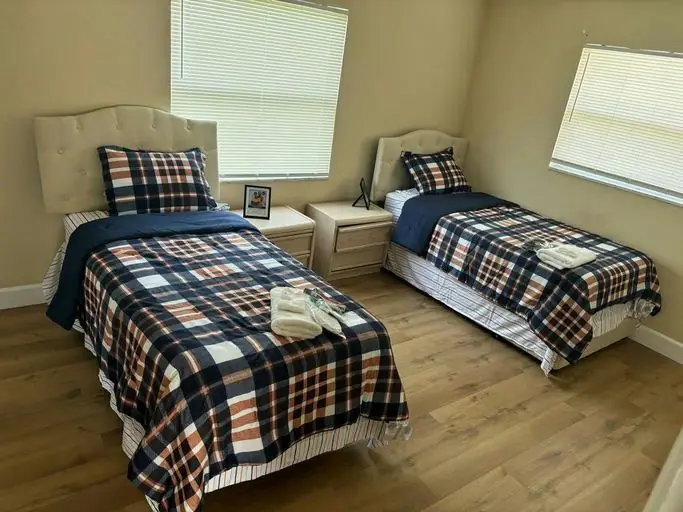
Two sober living homes can charge the same rent, sit on the same kind of street and post nearly identical photos. In one, residents know each other's names, the house meets every week, and a person who slips has a plan for where to go that night. In the other, a manager collects cash, the rules live in someone's head, and nobody is quite sure what happens if things go wrong.
You usually can't tell which is which from a listing. You can tell from a conversation, if you know what to ask. This guide is for the person moving in and for the family member, counselor or friend helping them choose.
The short answer
A good sober living home puts its substance-free policy, house rules and every fee in writing before you pay, and gives you a signed copy. It builds real peer accountability, like regular house meetings and shared responsibility, and has a clear relapse policy that includes a safe plan for where you go next.
It also respects your rights: control of your own money, privacy of your health information, contact with family, freedom from forced labor and a way to file a complaint. In Texas, accreditation is voluntary, so if a home claims it, check with the accrediting organization yourself.
What sober living is, and what it isn't
A sober living home, often called a recovery residence, is housing with a substance-free environment and a culture of mutual support. It is not treatment. In Texas, a place that offers chemical dependency treatment needs a license from the Texas Health and Human Services Commission (HHSC), but a home that provides only housing and a recovery environment doesn't. If you're still sorting out the terms, our comparison of sober living and transitional housing lays out the differences.
That gap between "licensed" and "not licensed" is why the questions below matter. For most sober homes, nobody inspects the house before you arrive. Your questions are the inspection.
Know the level of support you're getting
The National Alliance for Recovery Residences (NARR) describes four levels of recovery housing. Homes don't always use the labels, but the framework helps you see what you're really being offered.
Level I, peer-run. Democratically run by the residents, usually in a single-family home, with no paid staff inside. House meetings, drug screening and house rules provide the structure, and residents are encouraged to attend outside mutual-aid meetings. Oxford Houses follow this peer-run model.
Level II, monitored. At least one paid position, often a house manager, working under an organization's written policies. Residents still lead much of daily life, with house meetings, life skills and clinical care used out in the community.
Level III, supervised. More staff structure, with certified staff or case managers and service hours provided in the house.
Level IV, service provider. Clinical services delivered in-house by credentialed staff, often as a step-down phase from a treatment program. It can feel more institutional. NARR notes that licensing for Levels III and IV varies by state.
Neither end is better in general. Someone with a few months of steady recovery and a job may do well in a peer-run house. Someone coming straight out of residential treatment may want more structure for a while. Whatever the label, ask, "Who runs this house day to day, and who do they answer to?"
House rules: what to ask about before you move in
Rules are what turn a house into a recovery environment, but only if they're clear, written and applied to everyone. SAMHSA's 2023 Best Practices for Recovery Housing says recovery residences should have clearly written, easy-to-read policies and expectations, that each resident should sign them, and that residents should get a copy. Ask to see the rules before you pay anything.
Then read for the things that will shape your days:
- What "substance-free" covers. Alcohol and illegal drugs, certainly. Ask about everything else the house treats as off-limits, and how prescribed medications are handled.
- Curfew, overnights and passes. When you need to be in, and how you get permission to stay elsewhere.
- Meetings and recovery activities. Whether outside meetings, a sponsor or a set number of meetings a week are required.
- Work, school or volunteering. Many homes expect residents to be working, studying or actively looking within a set time.
- Phases. Some homes loosen rules as you build time. Ask what earns each step and whether it's written down.
- Chores and guests. Who cleans what, and when visitors can come.
If you take buprenorphine, methadone or naltrexone, ask about the medication policy first. SAMHSA recommends that recovery homes not put barriers in front of residents who use prescribed medications, and our guide to recovery housing that accepts MAT in Texas covers what to ask and what your rights are.
Accountability that supports recovery
Accountability in a good home feels like a community keeping its word to each other. In a poor one, it feels like being watched by someone with the power to put you out.
Drug and alcohol screening. NARR's standards call for a written drug screening policy, and SAMHSA describes testing when someone in the home may be using. Ask how often the house tests, whether it's random, who pays and what a test costs, and what follows a positive test. A house that can't answer those plainly is improvising.
House meetings. One of the practices in NARR's standards is a community or residence meeting at least once a week. Meetings are where chores get sorted, problems get aired before they explode and newer residents hear from people further along. Ask when the meeting is and whether you can sit in on one before deciding.
Resident voice. In peer-run homes, residents make real decisions. Oxford House says its houses are run by residents who elect officers for six-month terms, and new members are accepted when there's a vacancy and 80 percent of current members approve. Other homes give residents less say, which is fine as long as you know who decides what.
The relapse question is the one most people are afraid to ask. It's also the one that tells you the most about a home.
Relapse policies: ask before you need the answer
Nobody moves into sober living planning to use. But people in recovery do sometimes return to use, and how a home responds can shape what happens next. SAMHSA's checklist for choosing a recovery home asks whether there are "adequate and clear policies" for a recurrence of use, and NARR's standards list relapse policies among the things a written resident agreement should cover.
Homes take different approaches. Oxford House charters require a house to immediately expel any resident who returns to using alcohol or illicit drugs. Other homes have a written response, like a meeting with the house manager, more frequent testing, or a referral to a higher level of care with a chance to come back. Neither approach is automatically right, but you should know which one you're signing up for.
Ask out loud
Before you sign, ask about relapse
- If I use, do I have to leave tonight, or is there a process?
- If I have to leave, where do people go? Will you help me get to detox, treatment or a safe place?
- What happens to my belongings, and to rent I've already paid?
- Can I come back after treatment, and on what terms?
- Does the house keep naloxone on hand, and do residents know how to use it?
That last question is not a small one. AHRQ notes that people who begin using opioids again after a period of abstinence are at heightened risk for overdose, because their tolerance may have changed. SAMHSA's own checklist asks whether a recovery home has overdose reversal medication like naloxone available. A home that plans for the hardest night is taking your recovery seriously.
Costs: get every dollar in writing
Sober living is usually paid weekly or monthly, and prices vary widely with the city, the level of support and what's included. Price alone tells you little. Clarity tells you a lot.
NARR's standards say an operator should tell applicants about all fees and charges before accepting any money, and explain the refund policy before you enter a binding agreement. Ask for a written list that covers the rent, any move-in or program fee, drug testing charges, what utilities and supplies are included, and when payments are due. Then ask the question that matters most if things change: "If I leave or am asked to leave, what do I get back?"
In peer-run Oxford Houses, residents pay an equal share of the house expenses. In other homes the operator sets the rate. Either way, get a receipt for every payment. If your income comes from benefits, our guide to using SSI or SSDI to secure housing can help you check whether a rate is realistic.
Your rights as a resident
SAMHSA's best practices list rights every recovery resident should have. In practical terms, they look like this.
Freedom from abuse and neglect, and from forced or coerced labor. Chores in your own house are normal. Being sent to work for the operator's business is not. NARR's standards say paid work arrangements must be completely voluntary and residents can't suffer consequences for saying no.
Freedom to manage your own finances. Nobody at the house should hold your benefits card, PIN or paycheck. If you genuinely need help handling Social Security payments, SSA can appoint a representative payee, and that is a formal role with rules, not something a house manager takes on informally.
Privacy of your health records and freedom to have family support. Your diagnosis and treatment history aren't house gossip, and a home that discourages contact with family is a warning sign.
A way to file and resolve complaints. Under NARR's standards, a home should have a written grievance procedure, and residents should be able to take a complaint the house doesn't resolve to the operator's oversight body.
Federal law adds another layer. The Fair Housing Act's definition of disability can cover a person in recovery from a substance use disorder, though it excludes current illegal use of a controlled substance. If you believe a home turned you away because of your recovery history or prescribed treatment, you can report it to HUD, and a legal aid office can review your situation.
Peer support you can feel when you visit
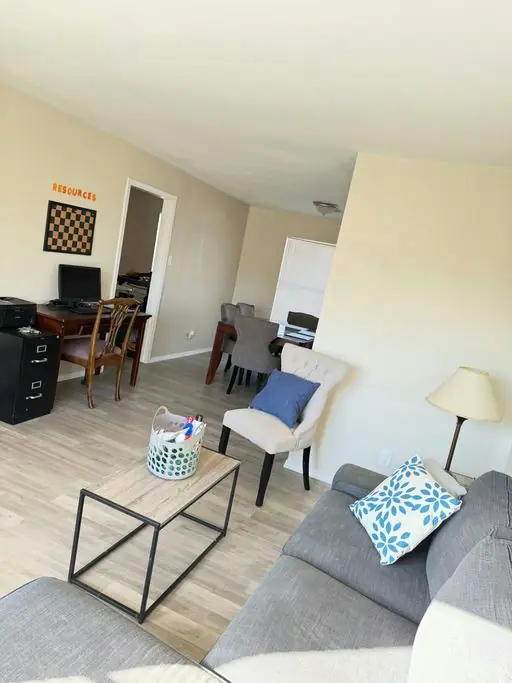
SAMHSA describes recovery housing as built on a social model, where peer-to-peer connection and mutual aid do much of the work. You can usually sense it within half an hour. Do residents greet each other? Does anyone have a year or more in the house, or did everyone arrive last month? Is there a shared meal, a ride to meetings, someone who takes the new person under their wing?
Ask a resident, without staff around, why they chose this house and what they'd change. Ask whether the rules apply the same way to the longtime resident the manager likes and to the person who arrived last week. People in recovery tend to be honest about this, especially with someone in their shoes.
Red flags worth walking away from
- Free rent, cash or gifts if you enroll in a particular treatment program, especially one the house picks for you. That can be a sign of patient brokering, where someone is paid to steer people into treatment so a facility can bill insurance.
- Accreditation claims you can't confirm, or treatment offered with no state license.
- Holding your ID, benefits card or PIN.
- No written rules or agreement, or one you can't keep a copy of.
- No answer on relapse, or an answer that amounts to "you're out on the street."
- More people than beds, or a house that looks nothing like the photos.
Texas takes patient brokering seriously. Section 102.001 of the Occupations Code makes it a crime to offer or accept payment for securing patients for licensed health care providers, and Chapter 469 of the Health and Safety Code separately bars a recovery house's responsible party, employees and agents from soliciting or accepting payment for referring residents to licensed providers. Federal law, 18 U.S.C. 220, names recovery homes directly. Consumer complaints can go to the Texas Attorney General, and complaints about a licensed treatment facility go to HHSC.
How to check a Texas home's claims
Since 2023, Texas has had a voluntary accreditation system for recovery housing under Health and Safety Code Chapter 469. The approved accrediting organizations are NARR, whose standards are applied in Texas by its state affiliate, the Texas Recovery Oriented Housing Network (TROHN), and Oxford House. Since September 1, 2025, a recovery house that isn't accredited is ineligible for state money, and the law bars a home from advertising accreditation it doesn't have.
- Check accreditation yourself.Search TROHN's recovery housing directory, or Oxford House's listings, rather than relying on a logo on a website.
- Check any treatment claim.If the home says it provides treatment, look up its license through HHSC.
- Visit at a normal hour.See your actual bed, the bathroom, the kitchen and where medications are kept.
- Read the agreement overnight.A good home will let you take it home or show it to a counselor or family member.
Accreditation isn't a guarantee, and some good homes aren't accredited. But an accredited home has agreed to published standards, and that gives you something to hold it to. If you're leaving a treatment program soon, our guide to planning housing before you leave rehab covers timing, and our checklist of documents needed for sober living helps you apply quickly once you've chosen.
Need help right now? SAMHSA's National Helpline, 1-800-662-4357, is free, confidential and available 24 hours a day for treatment referrals. If you or someone you're with may be overdosing, call 911. For a mental health crisis, call or text 988.
How Ready Rooms can help
Ready Rooms doesn't run sober homes or provide treatment. We help people find housing, and some of the independently operated homes in our Texas network are recovery-supportive. Those providers write their own house rules, set their own prices and decide who they accept, so bring these questions with you even when we're the ones who pointed you to a home. Our provider standards explain what we ask of homes in the network.
Looking for a recovery home that fits?
Tell us your area, your budget and the kind of structure you want, including anything you need a home to accept, like prescribed medication. Homes in our network set their own rules and admission decisions, and we'll look for ones that may fit.
Prefer to talk it through? Call or text (281) 949-8064.
Questions people ask about sober living
Do sober living homes in Texas need a license?
Not if they only provide housing and a recovery environment. A place that offers substance use treatment needs a license from Texas HHSC. Recovery homes can choose voluntary accreditation through NARR standards (applied in Texas by TROHN) or Oxford House, and homes must be accredited to receive state money.
What happens if I relapse in sober living?
It depends on the home. Oxford Houses must immediately expel a resident who returns to using. Other homes have a written process, such as a meeting, more testing or a referral to treatment with a chance to return. Ask before you move in, and ask where people go and what happens to their belongings and rent.
How long do people stay in sober living?
It varies. Oxford House says residents in good standing can stay as long as they stay sober and pay their share, with an average stay of about a year. Other homes set a length of stay or use phases. Ask what the home expects and whether there's any pressure to leave.
Can a sober living home hold my benefits card or ID?
It shouldn't. SAMHSA lists freedom to manage your own finances as a resident right. If you need help managing Social Security benefits, that goes through SSA's representative payee program.
Sources
- SAMHSA: Best Practices for Recovery Housing (2023)
- National Alliance for Recovery Residences: Levels of Support
- National Alliance for Recovery Residences: NARR Standard 3.0
- National Alliance for Recovery Residences: Texas Recovery Oriented Housing Network (state affiliate)
- Texas Recovery Oriented Housing Network: Find Recovery Housing
- Oxford House: Questions and Answers (charter conditions, admission and length of stay)
- Texas Health and Safety Code Chapter 469: Voluntary Accreditation of Recovery Housing
- Texas Health and Safety Code Chapter 464: Facilities Treating Persons with a Chemical Dependency
- Texas HHS: Chemical Dependency Treatment Facilities (licensing and license verification)
- AHRQ Academy: Overdose risk (Opioid Use Disorder playbook)
- Social Security Administration: Representative Payee Program
- 42 U.S.C. 3602: Fair Housing Act definitions
- HUD: Report housing discrimination
- Texas Occupations Code Chapter 102: Soliciting Patients
- 18 U.S.C. 220: Illegal remunerations for referrals to recovery homes, clinical treatment facilities and laboratories
- Texas Attorney General: File a consumer complaint
Ready Rooms provides housing navigation and referral. We are not a treatment provider, do not operate recovery residences, and do not provide medical or legal advice. Housing is offered by independently operated providers in the Ready Rooms network, who make their own admission decisions.