When you're coming home from prison or jail, the first place that says "we have a bed" is hard to turn down. Sometimes that place is exactly what you need. Sometimes it's a house with no rules on paper, a manager who wants cash tonight, and nothing that protects you if things go sideways next month.
From the outside, the two can look the same. This guide, for the person coming home and the family doing the calling, is about telling them apart before you pay.
The short answer
Before you pay or sign, confirm three things: that your parole or probation officer will approve the address, what kind of housing it actually is (a room in a shared home, a private reentry program, or a halfway house tied to your release), and what you're agreeing to in writing, including fees, refunds, rules and how someone can be asked to leave.
Then visit, talk to people who live there, and walk away from anyone who rushes you, wants to hold your ID or benefits card, or won't put anything in writing.
Get the address approved before money changes hands
On parole or mandatory supervision. The Texas Department of Criminal Justice issues a release certificate contingent on an approved residence plan, and the TDCJ Ombudsman notes that most residence investigations are unannounced. After release, one of the standard rules is getting your parole officer's written permission before changing residence. So a home that can't handle an officer showing up to look around, or that won't confirm details to the Parole Division, is a problem before you ever move in.
On probation (community supervision). In Texas, probation is run by local community supervision and corrections departments in each county or judicial district. The state's Community Justice Assistance Division sets standards and funds those departments, but it doesn't supervise anyone directly. Your judge can order you to stay within a specified place, and your officer needs your current address. Conditions differ from court to court, so read yours and ask your officer before you move.
Read your special conditions, too. A parole panel can add special conditions, either on the release certificate or later. A condition about curfew, where you can go or who you can be around can rule out a home that otherwise looks right. If you're required to register as a sex offender, our guide to finding housing in Texas while on the registry covers how registration, supervision and local rules each shape where you can live.
The practical rule for all of it: don't pay anything nonrefundable until the address is approved. If a provider wants something to hold the bed, ask for it in writing that the money comes back if your officer says no. Our parole and probation housing guide covers how this fits into a release plan, and the first 30 days home walks through the weeks after.
Find out what kind of housing it really is
"Transitional," "reentry," "second chance" and "halfway house" get used loosely. What matters is how the place is set up, because that decides who chooses it, which rules apply and what protections you have. Most options fall into one of three groups.
A room in a shared home. You pay rent for a room and share the kitchen, bathroom and common space. The rules are mostly about living together, and the landlord or operator decides whether to accept you.
A private reentry or transitional program. Housing plus expectations, like case planning, classes, curfews, job search or work requirements, sometimes with a set length of stay or phases that loosen the rules over time. These are usually run by nonprofits, churches or private operators.
A halfway house that is part of your release. TDCJ works with Residential Reentry Centers, often called halfway houses. According to TDCJ's Parole Division, a person with no other resources will be placed in a halfway house as bed space is available, and family members can't pick which one. Separately, the TDCJ Ombudsman says people without family or friends to live with are encouraged to contact approved noncontract Residential Reentry Centers for acceptance. The list of those centers is available on the unit, and any acceptance letter goes to the person's Institutional Parole Officer so the placement can be investigated.
That last point matters for families. The Ombudsman is clear that the parole plan must come from the person who is incarcerated. If you're offering a home or found a program, give your loved one the full address and your phone numbers so they can submit it.
Follow the money, on paper
Costs vary a lot, and that's not a red flag on its own. What protects you is knowing what each dollar is for and having proof you paid it. Our questions to ask a shared-housing provider covers included utilities, meals and payment schedules. Here the focus is on what you should walk away holding.
A written agreement. It should state the weekly or monthly amount, the due date, what's included, any program fees, and how move-out and refunds work. A home that runs a real program will have its rules written down and let you keep a copy.
The name of every charge. A "security deposit," a "move-in fee," a "program fee" and "first week's rent" are different things. Texas Property Code generally requires a landlord to refund a tenant's security deposit within 30 days after the tenant moves out, but a fee labeled nonrefundable is a different conversation. Ask, in plain words, "If I leave in two weeks, what do I get back?" and get the answer in writing.
A receipt for every payment. Under the Property Code, a landlord who accepts cash rent from a tenant has to give a written receipt. Ask for one every time anyway, or pay by money order and keep the stub.
And never pay for a room you haven't seen, in person or on a live video call, or one the "manager" can't show you the inside of.
Read the house rules against your supervision
In a structured home, the rules decide most of your day, and they have to fit alongside the rules you're already living under. Read these closely.
Curfew and sign-out. Does the house curfew line up with any curfew in your conditions, your work shift and your reporting dates? If you work nights or a second shift, ask before you move, not after your first late return.
Required programming. Classes, case management meetings, job search hours or community service. Do they cost extra, and do they conflict with anything your officer or court already requires?
Testing. If the home tests for drugs or alcohol, ask how often, who pays, and what happens after a positive result, including whether the home reports results to your officer.
Chores versus labor. Shared chores are normal. Being expected to work for the operator's other business for little or no pay is not, and you should be able to say no without losing your room.
Visitors and family. When can family visit, can children visit, and are there rules about who can come inside? Check those against your own conditions too.
Complaints. Who do you go to if there's a problem with staff or another resident, and is that written down?
Know whether you're a tenant, and what happens if you have to leave
Texas Property Code defines a lease as any written or oral agreement for the use and occupancy of a dwelling, and a tenant as someone authorized by a lease to occupy it. Many people renting a room in a shared home fit that description. For tenants, Section 92.0081 generally bars a landlord from locking you out except through the court eviction process, with narrow exceptions. Whether that applies to a structured program, a halfway house or a short stay can be a real legal question, and the answer depends on the setup.
You don't have to settle the law before moving in. You do need answers to two plain questions: "If you ask me to leave, how much notice do I get?" and "What happens to my things?" Then ask a third that matters more for you than for most renters: "Will you tell my officer, and how fast?" Losing an approved residence can create its own trouble with supervision, so you want the plan in place before you need it.
Red flags worth walking away from
Any one of these is a reason to slow down. Two or more is a reason to leave.
- Pressure to pay cash, today, before you've seen the room, read anything or talked to your officer.
- No written agreement, or one you're not allowed to keep a copy of.
- Asking to hold your ID, Social Security card, benefits card or PIN. Keep control of your own documents and money. If you need help managing Social Security benefits, that goes through SSA's representative payee process, not a house manager.
- Promises to "handle" your parole officer, get your conditions changed, or skip the approval step. Nobody running a home can do that for you.
- Discouraging you from giving the address to your officer, or from having your officer visit.
- Residents who seem afraid to talk when staff are in the room.
If you paid money to someone who disappeared or never had a real room to rent, you can file a consumer complaint with the Texas Attorney General. A legal aid office can tell you whether you have other options.
Check it out yourself
- Look up the name.Search the business name with "reviews" and "complaints." For a company, the Texas Comptroller's Franchise Tax Account Status Search lets you look an entity up by name. A name that shows up nowhere is worth a question.
- Map the address.How far is it from your parole or probation office, your job or job search, and a bus line? A great house you can't get to work from is a hard place to stay.
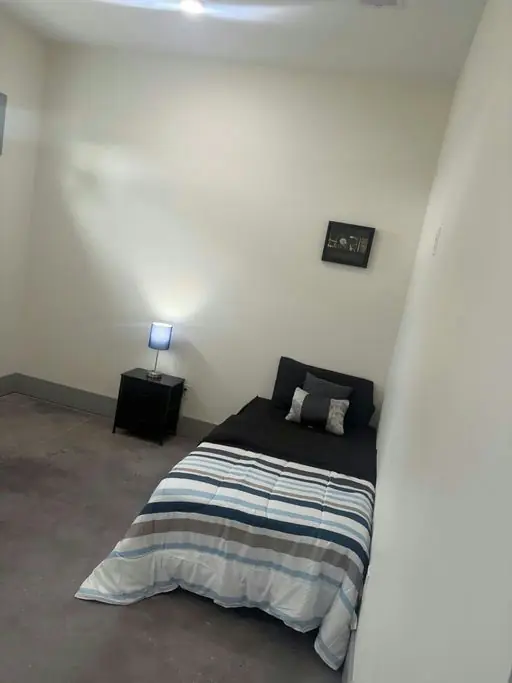
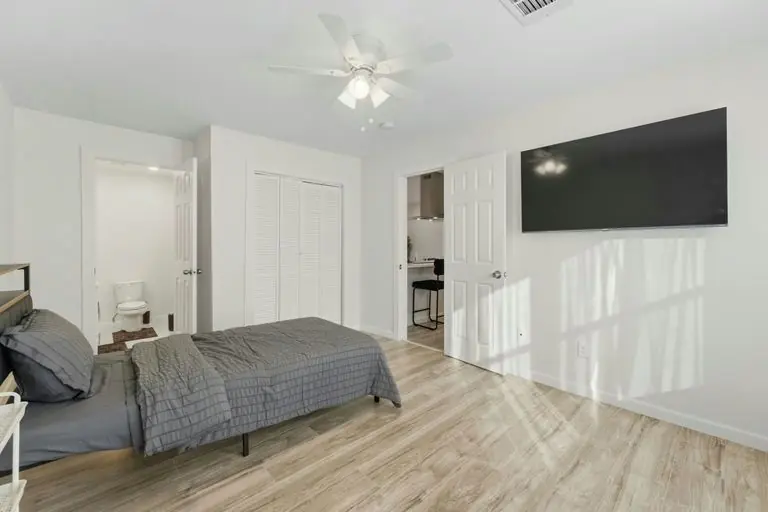
- Visit, and see your actual room.Look at the bedroom you'd sleep in, the shared bathroom, smoke detectors, and where you'd keep your things.
- Talk to a resident without staff around.Ask how long they've been there, whether the rules are enforced the same way for everyone, and whether people get their money back when they leave.
- Ask the people who see these homes every day.Reentry coordinators, chaplains, case managers and parole officers often know which homes have a track record, good or bad.
- Take the agreement home before you sign.A legitimate provider will let you read it overnight or show it to a family member.
Bring with you
What to have ready
Good homes screen too, so come prepared.
- A photo ID, or proof the replacement is underway
- Your parole or probation officer's name and number
- Your release certificate or discharge paperwork
- Proof of income, or the date it starts
Our list of documents for housing intake in Texas covers what to do if something is missing, and if standard apartments keep turning you down, looking for housing when traditional rentals say no explains which options screen differently.
Where Ready Rooms fits
Ready Rooms is a housing navigation and referral network. We connect people with independently operated housing providers across Texas, including homes that work with justice-involved residents. We don't run halfway houses, we aren't part of TDCJ or any parole or probation department, and each provider sets its own rules, prices and admission decisions. You can read what we expect from homes in our network on our provider standards page. Everything in this guide still applies to homes we refer you to.
Want a shorter list to check out?
Browse homes in our network that work with people coming home from incarceration, then use this guide to vet the ones that look right. Availability and policies vary by provider.
Prefer to talk it through? Call or text (281) 949-8064.
Questions people ask
Should I pay a deposit to hold a room while my parole address is being approved?
Only if the provider agrees in writing that the money comes back if the address isn't approved. Otherwise, wait. A home that works with people on supervision should understand that approval comes first.
Can my family choose the halfway house I'm released to?
Not for a TDCJ placement. TDCJ's Parole Division says a person with no other resources is placed in a halfway house as bed space is available, and families can't select which one. A person can also seek acceptance at an approved noncontract Residential Reentry Center, using the list available on their unit, and submit the acceptance letter to their Institutional Parole Officer for investigation.
Can a reentry home lock me out?
If you're a tenant under Texas law, a landlord generally can't lock you out except through the court eviction process, with narrow exceptions. Whether you're a tenant can depend on how the home is set up, so ask how move-outs work before you sign, and contact a legal aid office if you're locked out.
Sources
- Texas Department of Criminal Justice, Ombudsman FAQ: Parole (release plans, residence investigations and Residential Reentry Centers)
- Texas Department of Criminal Justice: Parole Division FAQ (halfway houses, special conditions and changing residence)
- Texas Department of Criminal Justice: Community Justice Assistance Division
- Texas Code of Criminal Procedure Article 42A.301: Basic conditions of community supervision
- Texas Property Code Chapter 92: Residential Tenancies (definitions, cash rent receipts, lockouts)
- Texas Property Code Section 92.103: Obligation to refund security deposit
- Social Security Administration: Representative Payee Program
- Texas Attorney General: File a consumer complaint
- Texas Comptroller: Franchise Tax Account Status Search
Ready Rooms provides housing navigation and referral and is not affiliated with the Texas Department of Criminal Justice or any parole or probation department. Housing is offered by independently operated providers in the Ready Rooms network, who make their own admission decisions. This article is general information, not legal advice.