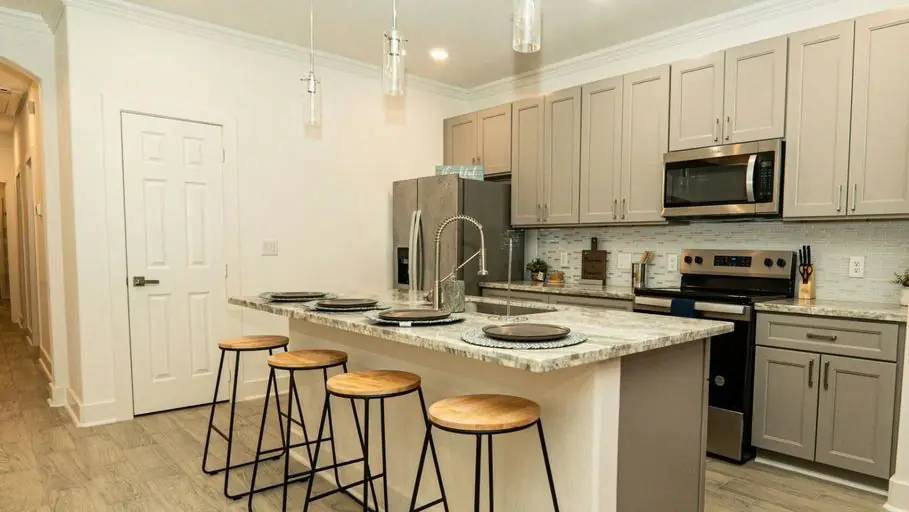
On paper, the choice looks simple. An apartment is yours. A room in a shared home is cheaper. But when people actually price out a move, the comparison rarely comes down to rent. It comes down to everything you have to buy, connect and pay for before you can sleep there.
If you manage daily life on your own and want a place that fits your budget, here's how the two options really stack up.
The short answer
A furnished room in a shared home usually costs far less to move into than an apartment, because furniture, utility deposits and household setup are already handled, and utilities are often in the rent.
An apartment offers more privacy and space but typically requires more up front: a deposit, application fees, income at a multiple of the rent, utility accounts and a fully furnished home you supply yourself.
Side by side
| Typical apartment | Furnished room, shared home | |
|---|---|---|
| Screening | Credit, background and income at a multiple of rent | Varies by provider; many review applicants individually |
| Move-in money | Deposit, application and admin fees, sometimes first month | Usually smaller; ask each home |
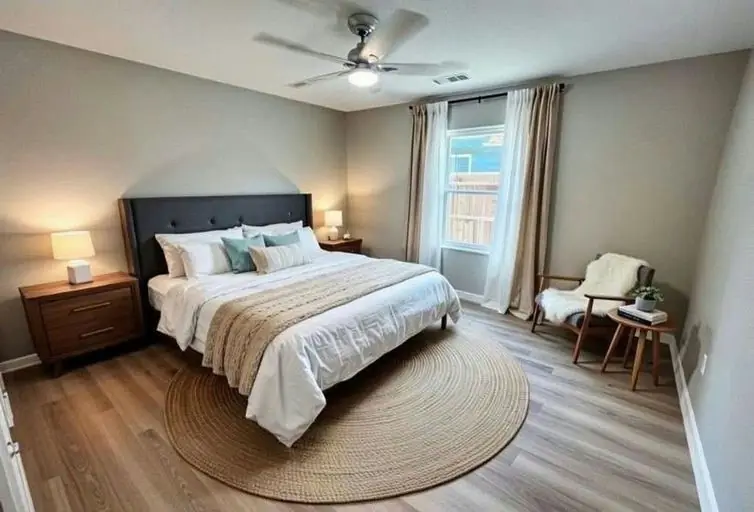
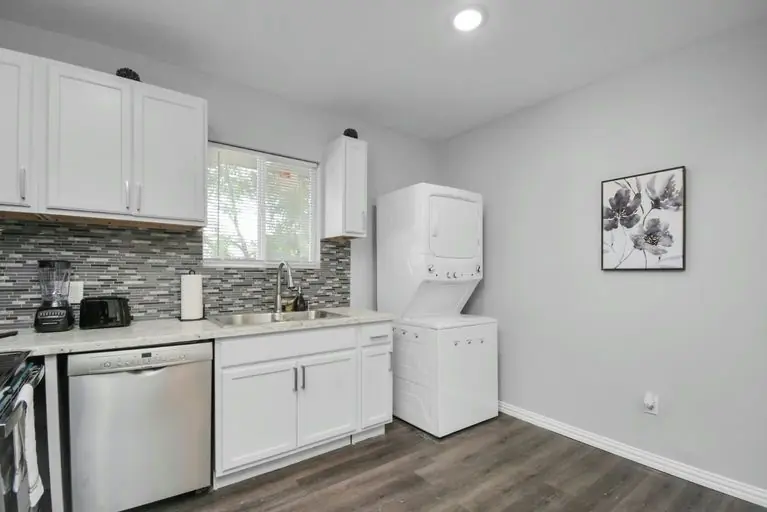
| Furniture | You buy or move everything | Room and common areas furnished |
| Utilities | Separate accounts, deposits and bills | Often included in rent |
| Lease | Often 12 months | Varies; often more flexible |
| Privacy | Your whole unit | Your room; shared kitchen and living space |
The setup bill nobody mentions
Here's what moving into an empty apartment usually involves, beyond rent. Price it in your own area. The total surprises most people.
Before the first night
- Security deposit and application fees
- Electric deposit or connection fee
- Internet installation
- A moving truck or help moving
- Bed, mattress, sheets and pillows
In the first month
- Sofa, table, chairs and lamps
- Pots, dishes, utensils and a microwave
- Cleaning supplies, towels and shower curtain
- Renter's insurance, if required
- Your first full utility bills
With a furnished room, most of that list simply doesn't apply. You bring clothes, toiletries and the personal things that make a room feel like yours. For a fuller budgeting walkthrough, see how to calculate a realistic housing budget.
An apartment you can't afford to furnish isn't really independence. A room you can afford to keep might be.

Inside the Housing Network
When a room is the smarter model, and when it isn't
Shared housing is a real housing model, not a lesser one. When we look at homes for the Ready Rooms network, we're also thinking about who each home is right for. A room tends to be the better call when:
- Cash on hand is limited. Lower move-in costs can mean moving this month instead of saving for three more.
- Income is steady but modest. Benefits, part-time work or a fixed check stretch further when utilities are bundled.
- Flexibility matters. A new job, a new city, or a life change where a 12-month lease is a risk.
- You'd rather not live alone. Some people simply do better with other adults around.
An apartment may be better if you need a lot of space, have a household of your own, or know shared kitchens aren't for you. That's a fair call. We'd rather you choose well than choose fast.
Zioni leads partnerships, provider development and housing expansion for Ready Rooms. The guidance above describes what we look for in homes across our network.
More than a bed
Independence without the setup
Independent living isn't about doing everything the hard way. It's about running your own life, and a furnished, all-in room leaves more of your money and energy for exactly that.
- Fully furnishedStart your independent life the day you move, not after weeks of buying and assembling furniture.
- Utilities includedOne payment covers the essentials, so your budget doesn't swing with the seasons.
- Meals and meal helpWhere meals or meal help are offered, you can cook when you want to, not because you have to.
- Transportation helpWhere transportation help is available, getting to work or errands without a car gets easier.
Free Wi-Fi. Work from home, stream, study and stay connected without a separate internet bill.Social services and support. Some homes connect residents with practical resources when they want them.
Features and services vary by home and provider.
What you give up, honestly
Shared living works best when you go in with clear eyes. You'll share a kitchen and common space, and that means some coordination: cleaning schedules, quiet hours, fridge space. Good homes make this easy with written house rules and a responsive manager. Ask to see the rules before you commit, and ask who your housemates are likely to be, like working adults, retirees or students.
Our list of questions to ask a shared-housing provider covers what to clarify, and what to pack helps you plan the move itself.
Find a room that fits your life
Tell us the area, your budget and what matters most, like a private room, included utilities or a short commute. We'll look across providers in our network for rooms that fit, beyond what's listed when you browse.
Prefer to talk it through? Call or text (281) 949-8064.
Questions people ask
Is renting a room cheaper than an apartment in Texas?
Usually, both monthly and especially at move-in. A furnished room with utilities included removes furniture purchases, utility deposits and separate bills. Exact costs vary by city and home, so compare total cost, not just rent.
Do I need good credit to rent a room?
Not always. Many shared housing providers review applicants individually and focus on current income and references. Each provider sets its own criteria.
Can I get a private room in a shared home?
Yes, many homes offer private rooms. Shared rooms usually cost less. Tell us your preference and budget when you get matched.
Is independent living the same as senior living?
Not here. Independent living simply means a home for adults who manage their own daily life. Residents can be any adult age, depending on the home.
Ready Rooms provides housing navigation and referral. Housing is offered by independently operated providers in the Ready Rooms network, who set their own rates and make their own admission decisions.