
The conversation usually starts after a hospital stay or a fall. A parent can no longer manage safely alone, someone mentions assisted living, and the first question is the obvious one: who pays for this?
The honest answer has three parts. Medicare generally doesn't. Texas Medicaid can, but only for part of the bill and only for people who qualify. And the part Medicaid leaves out, room and board, still has to come from the resident's own income every month.
The short answer
Medicaid can pay for assisted living services in Texas, but not for room and board. Through the STAR+PLUS Home and Community-Based Services (HCBS) program, Texas Medicaid covers the care side of assisted living for adults who qualify medically and financially, at facilities that accept STAR+PLUS.
The resident pays room and board from their own income. Under the formula in Texas Health and Human Services (HHSC) guidance, that is the SSI federal benefit rate minus an $85 personal needs allowance, which works out to $909 a month in 2026.
Why Medicare doesn't solve this
Medicare is health insurance. It pays for hospital stays, doctor visits, prescriptions under Part D and, in limited situations, short-term skilled nursing or rehab after a hospitalization. What it does not pay for is ongoing help with daily life, the kind of care assisted living provides.
Medicare's own guidance is direct: it doesn't pay for long-term or custodial care, which includes help with bathing, dressing, eating and getting around when that is the only care someone needs. Assisted living falls squarely in that category. Medigap supplement policies don't fill the gap either.
So when a family hears "Medicaid might cover it," that's the program worth understanding. In Texas, the path runs through STAR+PLUS.
How STAR+PLUS pays for assisted living
STAR+PLUS is Texas Medicaid's managed care program for adults 65 and older and adults with disabilities. Members receive their Medicaid benefits through a health plan they choose. Within STAR+PLUS, the Home and Community-Based Services option is designed for people whose care needs would otherwise lead to a nursing facility, and assisted living is one of the services it lists.
Who can qualify
Two separate tests apply, and a person needs to meet both.
- Medical need. HHSC assesses whether the person's needs are significant enough that they would otherwise require nursing facility care. Needing occasional help is usually not enough.
- Financial eligibility. For 2026, the monthly special income limit used for these programs is $2,982 for an individual (three times the SSI rate), effective January 1, 2026, and the countable resource limit for an individual is $2,000. Income and resource rules have exceptions and are applied by HHSC eligibility staff, so treat these figures as a starting point, not a final answer.
Not every facility takes it
A licensed assisted living facility has to contract with a STAR+PLUS health plan to serve members through the program. Many don't, and those that do may have a limited number of Medicaid-funded spaces. Ask every facility the same question early: do you accept STAR+PLUS, and do you have openings for it right now?
The part Medicaid doesn't cover
Here is where families get surprised. In STAR+PLUS assisted living, Medicaid pays the facility for care services, but every resident still pays the facility for room and board. HHSC's guidance to residents spells out the split.
| Cost | Who pays | What to know |
|---|---|---|
| Care services | Medicaid, through the STAR+PLUS health plan | The care side of assisted living for members who qualify, paid to a facility that contracts with the plan |
| Room and board | The resident, from their own income | For one person, the SSI federal benefit rate minus the $85 personal needs allowance: $994 − $85 = $909 a month in 2026 |
| Copayment | Some residents, depending on income | Set by HHSC eligibility staff. Residents who receive SSI pay no copayment |
| Personal spending | The resident keeps $85 a month | For clothing, phone, hobbies and the like. It can't be applied to room and board |
A simple illustration
Picture a woman whose only income is SSI at the 2026 federal rate of $994 a month. If she qualifies for STAR+PLUS and moves into a participating facility, she would pay $909 for room and board, keep $85 for personal needs, and owe no copayment. Medicaid would pay the facility for her care.
Someone with a larger Social Security check may still qualify if their income is under the special income limit. Their room and board follows the same formula, but they may also owe a copayment that HHSC calculates from their income. The exact amount comes from eligibility staff, not from the facility and not from a calculator online.
When assisted living isn't the right fit, or isn't available yet
Not everyone who is told "assisted living" actually needs it. Assisted living is for people who need hands-on personal care: help bathing, dressing, moving around or managing medications. In Texas, a home that provides that kind of care to four or more unrelated residents must be licensed as an assisted living facility.
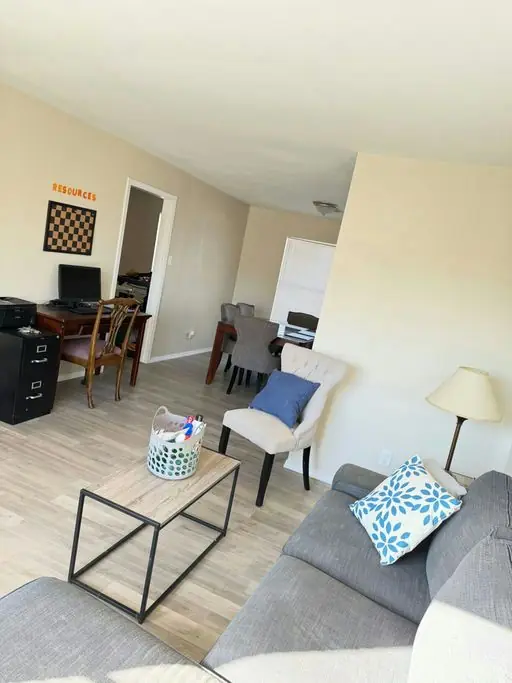
Many older adults on a fixed income are still independent with their daily care but can't afford an apartment on their own, or shouldn't be living alone. For them, a furnished room in a shared, supportive home can be safer and far more affordable than either an apartment or assisted living. Our guide to independent vs. supportive living for older adults walks through how to tell which level fits, and how much rent you can afford on Social Security, SSI or SSDI covers the budget side.
The right level of housing is the one that matches the help someone actually needs, not the most expensive option on the list.
Shared housing is also a reasonable bridge while a Medicaid application is pending or a STAR+PLUS opening is not yet available, as long as the person can live safely without personal care in the meantime.
Next steps
What to do this week
- Apply for Medicaid through Your Texas Benefits, or call 2-1-1 for help with the application.
- Ask about the STAR+PLUS Home and Community-Based Services assessment, and request it if care needs are significant.
- Gather proof of income. A Social Security benefit verification letter can be downloaded from a my Social Security account.
- Call assisted living facilities and ask specifically whether they accept STAR+PLUS and have openings for it.
- Write down, honestly, what help the person needs each day. That list decides whether assisted living or a less intensive home is the better match.
Program rules and dollar amounts change, usually every January. Confirm current figures with HHSC before making a decision.
Need housing that fits a fixed income?
If your parent or client doesn't need hands-on personal care, tell us the area, the monthly income and what matters most. We'll look for shared and supportive homes in our network that fit the budget.
Prefer to talk it through? Call or text (281) 949-8064.
Discharge planners and service coordinators
When a patient is waiting on a Medicaid decision or a STAR+PLUS opening but can live safely without personal care, a referral that states the monthly income amount and source, mobility needs and any help needed with daily activities lets us look for an appropriate interim home.
Questions families ask
Does Medicare pay for assisted living in Texas?
No. Medicare does not pay for long-term or custodial care, which includes the help with daily activities that assisted living provides. It may cover short-term skilled care after a hospital stay, but not an ongoing assisted living stay.
Does SSI pay for assisted living?
SSI is income, not a care benefit. A person on SSI who qualifies for STAR+PLUS can use their SSI to pay room and board while Medicaid pays for care. In 2026, that room and board amount is $909 a month under the HHSC formula, and SSI recipients owe no copayment.
Can Medicaid pay for assisted living at any facility?
No. The facility must be licensed and must contract with a STAR+PLUS health plan. Ask each facility directly whether it accepts STAR+PLUS and whether it has an opening for a Medicaid-funded resident.
What if my parent needs supervision but not hands-on care?
That person may be a better fit for a shared or supportive home than for assisted living, which often costs less. Be specific about needs: help with bathing, dressing or taking medications points toward licensed care, while needing reminders, meals and company may not.
Sources
- Medicare.gov: Long-term care coverage
- Texas HHS: STAR+PLUS and STAR+PLUS Home and Community-Based Services
- Texas HHS: Your Financial Rights in an Assisted Living Facility (STAR+PLUS)
- Texas HHS Medicaid Handbook: Budget Reference Chart (2026 limits)
- Social Security Administration: 2026 Cost-of-Living Adjustment Fact Sheet
- Texas Health and Safety Code, Chapter 247 (Assisted Living Facilities)
Ready Rooms provides housing navigation and referral. We are not an assisted living facility, do not provide personal care or medical services, and do not determine Medicaid eligibility. Figures are current as of 2026 and change periodically; confirm with Texas HHSC.