Parents of adults with intellectual and developmental disabilities often carry a quiet question for years: what happens when we can't do this anymore? Not today. Maybe not for a while. But someday the person who cooks, drives, reminds and advocates will need help themselves.
The families who handle that transition best usually start planning while everyone is healthy and nothing is urgent. This guide is written for them, and for the adult at the center of the plan.
The short answer
In Texas, housing for an adult with IDD usually comes through two tracks that can run side by side: publicly funded residential services, like the HCS Medicaid waiver, which starts with an interest list at your local IDD authority (LIDDA), and housing your family arranges, such as a room in a shared home paid for with benefits or family support.
Because interest-list offers depend partly on the date someone was added, getting on the list early is one of the most useful things a family can do.
Track one: publicly funded services through your LIDDA
Every Texas county is served by a local intellectual and developmental disability authority, called a LIDDA. It's the front door for state and Medicaid-funded IDD services.
The program families ask about most for housing is Home and Community-based Services (HCS), a Medicaid waiver for people with an intellectual disability or a related condition. According to Texas Health and Human Services, HCS residential options include group homes and host home or companion care arrangements. To get HCS, you contact the LIDDA to be added to the interest list. An offer depends on individual need, the date someone was placed on the list, and available funding.
The practical takeaway: add your family member to the interest list now, even if you don't plan to use it for years. You can always decline an offer. You can't go back and add earlier years.
| Setting | What it is | How it's arranged |
|---|---|---|
| HCS group home | A small home where residents receive waiver services and supports | Through an HCS offer and a waiver provider, starting with the LIDDA |
| Host home or companion care | Living with a host or companion who provides support | Through HCS, starting with the LIDDA |
| Shared housing | A room in a shared home; housing only, with any services arranged separately | Arranged by the family or adult, paid with benefits, income or family support |
Track two: housing your family arranges
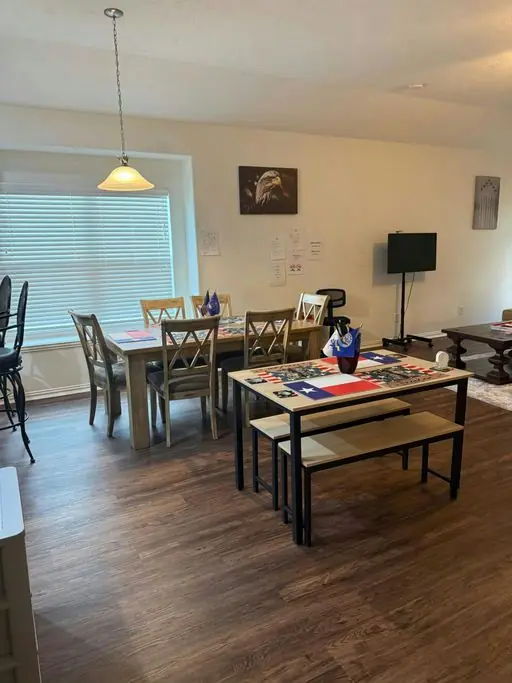
Some adults with IDD are fairly independent day to day. They can manage personal care, follow a routine and get around, but they aren't ready for an apartment alone. For them, a room in a well-run shared home can be a real step toward independence, with family still close by.
This kind of housing isn't a waiver service and doesn't provide disability services. Any supports, like a job coach or day program, come from separate providers. What a good shared home offers is a stable, structured place to live among other adults.

Inside the Housing Network
What families should look for in a home
When we evaluate homes for the Ready Rooms network, we think about who will thrive there. For adults with IDD and their families, a few qualities matter more than square footage:
- Predictability. Consistent routines, house rules in plain language, and a manager who communicates clearly with residents and families.
- The right household. A smaller, calmer home where residents are compatible tends to feel safer and more like home.
- Room to grow. Chances to practice independence, like doing laundry, helping with meals or taking the bus, in a supported setting.
- Openness with family. Clear visiting expectations and a provider who welcomes family involvement the adult wants.
The goal isn't just a placement. It's a home the person is proud of and wants to stay in.
Zioni leads partnerships, provider development and housing expansion for Ready Rooms. The guidance above describes what we look for in homes across our network.
More than a bed
Less to manage, more room for independence
For an adult moving out of the family home for the first time, every task that's already handled makes the transition gentler for them, and for the parents watching.
- Fully furnishedNo apartment to furnish or set up. Your family member brings personal things that make the room feel like theirs.
- Utilities includedNo accounts or bills for them to track. One predictable payment that families, payees or guardians can plan around.
- Meals and meal helpWhere meals or meal help are offered, nutrition is steadier and there's less pressure to cook every day from the start.
- Transportation helpHelp getting to work, day programs or appointments can keep the routines that help many adults with IDD thrive.
Free Wi-Fi. Video calls home, music and shows they love, and online tools for work or school.Social services and support. Some homes connect residents with practical support and community resources.
Features and services vary by home and provider.


A planning checklist for families
Start now, not in a crisis
Ten steps worth taking this year
- Add your family member to the HCS interest list through your LIDDA
- Confirm benefits are current, such as SSI or SSDI
- Decide who manages money: the adult, a payee or another arrangement
- Review decision-making support, like guardianship alternatives
- Write down daily routines, preferences and what calms them
- List doctors, medications and pharmacies
- Practice independence skills at home
- Tour a few housing options together, with no pressure
- Name a backup person if a parent suddenly can't help
- Talk with your family member about what they want
The best time to plan a move is when nobody has to move yet.
Start planning the next home
Tell us about your family member, the area, the budget and what kind of household would suit them. We'll look across providers in our network for homes that could fit, now or when the time is right.
Prefer to talk it through? Call or text (281) 949-8064.
LIDDA staff, service coordinators and guardians
LIDDA service coordinators, case managers, guardians and family members can refer directly. It helps to know the person's income and payee status, preferred area, daily support needs and any services already in place. We'll be clear about whether a shared home looks like the right fit.
Questions families ask
Does Ready Rooms provide IDD services or HCS placements?
No. Ready Rooms is a housing navigation and referral network. We don't provide disability services, administer Medicaid waivers or make HCS placements. Those go through your LIDDA and waiver providers.
How do we get on the HCS interest list?
Contact the local intellectual and developmental disability authority (LIDDA) that serves the county where your family member lives. Texas HHSC lists LIDDAs by county.
Can an adult with IDD live in shared housing while on the interest list?
Many families use shared housing as a step while waiting, if the adult can manage daily life with the support they already have. Each provider makes its own admission decision.
Who pays for shared housing?
Usually the resident, from benefits like SSI or SSDI, work income or family support. A representative payee or family member often handles rent.
Sources
Ready Rooms provides housing navigation and referral. It does not provide IDD services, administer Medicaid waivers or provide regulated care. Housing is offered by independently operated providers in the Ready Rooms network, who make their own admission decisions. This is general information, not legal advice.